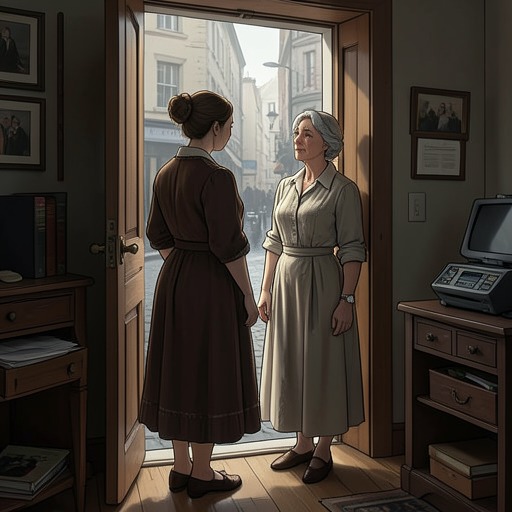
Tatyana Larina–Olga Larina sister relationship
Eugene OneginThe sister relationship between Tattiana Larina and Olga Larina is established primarily through contrast: the narrator moves from Olga to her elder sister, then introduces Tattiana as shy and quiet rather than brilliant or conspicuously beautiful. The poem gives the sisters different narrative presences, while its comments on Tattiana’s name and language place her within a wider literary and social world.
Introduction Through Contrast
The narrator announces the shift directly: having grown bored with Olga, he says that his verses must now occupy themselves with her elder sister. The transition makes the sisters’ relationship a formal hinge in the narration: Olga gives way to Tattiana as its focus, without the passage claiming that the two share a temperament or outlook.
Tattiana’s name receives unusual emphasis. The narrator repeats that this is her appellation and remarks on its novelty within a love narrative. Rather than introducing her through a close account of sisterly intimacy, the poem first makes her a distinct subject in its own right, marked by a name the narrator presents as unfamiliar to his literary audience.
Different Social and Personal Impressions
Tattiana is distinguished from Olga by the absence of the qualities associated with public notice: neither her sister’s brilliance nor beauty makes her the cynosure of every eye. The contrast defines the sisters relationally, but it does not reduce Tattiana to a foil. The narrator gives her a separate portrait, describing her as shy and silent, like a timid deer in the forest, even beneath her parents’ roof.
That image places Tattiana’s reserve within the family home, not merely before strangers. The evidence presents a quiet, self-contained figure in a domestic setting; it does not explain the sisters’ private bond or show Olga responding to her. Their relationship is therefore established through juxtaposed characterization rather than through a narrated exchange between them.
Language and Literary Context
The narrator says that Tattiana was not clever in Russian and scarcely read Russian newspapers. The qualification matters in a poem that pauses to discuss the social and literary status of language: the narrator undertakes to translate her letter, while his accompanying note describes French as the language of the Russian court and fashionable society and recalls a literary conflict between the French-oriented Arzamas writers and advocates of the vernacular.
These details situate Tattiana’s place in the poem without assigning the same linguistic habits to Olga. The sisters’ contrast thus extends beyond the narrator’s brief comparison of brilliance and beauty: Tattiana receives an inward, reticent portrait and becomes the subject of a letter whose language the narrator must mediate, while the surrounding commentary makes language itself a matter of social custom and literary debate. The evidence supports this distinction in narrative treatment, not a broader account of the sisters’ later closeness or conflict.